Immersive Narrative: A Filmmaker’s Review of “La La Land in Concert” at Radio City Music Hall
The live-to-Film concert presentation of Damien Chazelle’s Oscar-winning masterpiece is An immersive celebration ten years in the making
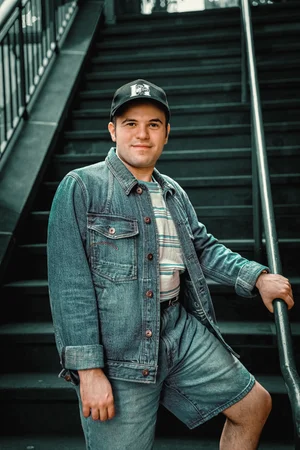
Max Hechtman with the poster for La La Land in Concert in front of Radio City Music Hall
The “City of Stars” was shining brighter than ever this past Saturday, April 11 as this was the perfect way to celebrate the 10th anniversary of Damien Chazelle’s 2016 Academy Award–winning modern musical classic La La Land. What made this screening singular was not simply the film itself, but the living, breathing soundtrack that accompanied every frame: composer Justin Hurwitz conducted a full orchestra and jazz band as they performed the score and songs — many co-written with Benj Pasek and Justin Paul — live in sync with the picture. The result was equal parts concert and cinematic resurrection, a rare event that reframed familiar images and sounds with the immediacy of live performance.
From the moment an overture rose from the stage and the first brush of brass announced “Another Day of Sun,” the evening established itself as more than a nostalgia piece. Hurwitz’s decision to include an Overture and an Entr’acte — two structural bookends that felt as though they should be part of future prints of the film — gave the screening a theatrical sweep that honored both the film’s Hollywood-musical affinities and its modern sensibilities. Hearing the themes unfold live added layers of texture and momentum that behind-the-scenes mixing and playback can’t replicate: the percussion snapped sharper, the horns breathed fuller, and the piano — Sebastian’s piano playing on screen and the emotional center of the score — cut through with crystalline clarity.
Max Hechtman inside Radio City Music Hall ahead of the performance.
Visually, La La Land hasn’t aged a day. Damien Chazelle’s direction and Linus Sandgren’s luminous cinematography remain a masterclass in marrying camera movement, color, and choreography to an underlying emotional logic. Emma Stone and Ryan Gosling’s chemistry as Mia and Sebastian is still magnetic; they inhabit the film’s highs and lows with a kind of vérité warmth that makes the grand gestures feel earned rather than theatrical. Musical set pieces like “Another Day of Sun” and “A Lovely Night” still rank among the best-staged sequences in contemporary cinema — kinetic, witty, and perfectly timed — while the film’s Epilogue retains its power to move an audience into quiet, bittersweet reflection.
This particular performance’s emotional apex came during “Start a Fire,” John Legend’s rousing, genre-bending number. With the band live on stage, the sequence acquired an extra surge of energy: the song’s contemporary pop-soul arrangement contrasted beautifully with the film’s jazz leanings, reinforcing Sebastian’s tension between purity of art and commercial success. It was one of the night’s biggest highlights, complete with fiery pyrotechnics, eliciting an enthusiastic response from an audience that clearly appreciated the score’s stylistic breadth.
Justin Hurwitz and the orchestra prepare to play “Another Day of Sun” as the opening nod to the CinemaScope era of cinema brings the audience into the film’s world.
Beyond the spectacle, the evening reiterated why La La Land endures: it’s a film about aspiration, craft, and the complicated compromises artists make. The live music underscored that theme in a visceral way. Watching performers, like Tony Award winner Marco Paguia on piano, recreate Hurwitz’s motifs in real time made the film’s meditation on practice, performance, and the fragility of creative relationships feel immediate. The orchestra’s collective breathing, the pianist’s exacting touch, and the subtle tempo shifts in the jazz band all functioned as a kind of meta-commentary — a reminder that art is a collaborative, living thing.
A personal highlight capped an already extraordinary night: meeting Justin Hurwitz after the performance and getting a signed copy of the sheet music for “Mia and Sebastian’s Theme.” That brief, human interaction felt emblematic of the whole experience — intimate, celebratory, and rooted in a shared love for music and storytelling. It’s one thing to admire a film from the house; it’s another to observe its scaffolding and creators up close, to see the craft that animates every cue and every beat.
Max Hechtman meeting La La Land composer Justin Hurwitz after the performance.
For filmmakers and cinephiles alike, the evening was instructive. It demonstrated the power of scoring to re-contextualize the visuals, the value of live performance as an enhancement rather than a gimmick, and the ways thoughtful direction and production design can sustain emotional honesty even within a heightened aesthetic. The screening also suggested a practical takeaway: future presentations of La La Land (and similar films) could benefit from concert-format elements like overtures and entr’actes, which help frame the story in theatrical terms and give audiences the breathing room to be absorbed before and after the narrative.
If there was any minor critique, it’s one tied to the contradictions inherent in revisiting a near-perfect work: live accompaniment magnifies every small imperfection. On occasion a rhythmic cue landed with slightly different shading than the on-screen playing, and an instrumental swell felt more dominant than the intimate hush a close-up required. Those moments, however, read more like charming reminders that film is an assembled art form — its illusion maintained by careful coordination — than as structural problems.
In conclusion, the 10th-anniversary live-score screening of La La Land was a revelatory celebration. It reaffirmed the film’s place in contemporary cinema as one of the greatest ever made, while opening it to new appreciation through performance.